Diet drinks don't directly spike blood sugar - but the research on artificial sweeteners and diabetes is more nuanced than the label suggests. Here's what you need to know.
Diet drinks sweetened with aspartame, sucralose, stevia, or acesulfame-K do not directly raise blood glucose in the way that regular soda does. For most people with diabetes, a diet soda will not cause a meaningful blood sugar spike. However, the research on artificial sweeteners, insulin response, gut microbiome effects, and long-term diabetes risk is more nuanced than a simple 'zero sugar = zero impact' answer. Diet drinks are significantly better than regular soda for blood sugar management - but they are not a neutral health choice, and water remains the best option.
In this article
- What Are Diet Drinks?
- Do Diet Drinks Raise Blood Sugar Directly?
- The Research Debate: Observational Studies vs. Controlled Trials
- Does Sweet Taste Alone Trigger an Insulin Response?
- Specific Sweeteners: Which Are Better Choices?
- Hidden Carbs: When 'Diet' Is Not What It Seems
- Practical Guidance: What to Drink
- How to Test Your Personal Response Using Glucoly
- Does Diet Coke raise blood sugar?
- Is Coke Zero safe for diabetics?
- What drinks can diabetics have?
- At a Glance: Diet drinks sweetened with artificial sweeteners do not directly raise blood glucose for most people.
- They are substantially better than regular soda (which contains 35–40 g of fast-digesting sugar per 355 ml can).
- Observational studies link diet soda to higher T2D risk - but confounding factors (reverse causation, overall diet quality) likely explain most of this.
- Some research suggests sweet taste alone may trigger a small insulin response - the clinical significance is debated.
- Sucralose and acesulfame-K may affect gut microbiome at high doses - research is ongoing.
- Some 'diet' drinks still contain small amounts of juice or real sugar - always check the label.
- Best hierarchy: water and sparkling water > unsweetened tea/coffee > diet drinks > regular soda.
What Are Diet Drinks?
Diet drinks - including Diet Coke, Coke Zero, Diet Pepsi, and similar products - replace sucrose or high-fructose corn syrup with artificial sweeteners or plant-derived sweeteners that provide sweetness with minimal to zero calories and no meaningful carbohydrate content. They are marketed to people trying to reduce sugar or calorie intake, including those with diabetes.
- Aspartame: used in Diet Coke, Diet Pepsi - approximately 200 times sweeter than sugar; breaks down in heat, so not suitable for cooking.
- Sucralose: used in many diet sodas and Splenda-sweetened drinks - heat-stable, approximately 600 times sweeter than sugar.
- Stevia (steviol glycosides): plant-derived, used in Coca-Cola Life, some Pepsi variants - generally viewed as the most 'natural' option.
- Acesulfame-K (Ace-K): often combined with aspartame or sucralose in diet sodas to improve flavor.
- Saccharin: one of the oldest artificial sweeteners; used in some diet beverages; may have a bitter aftertaste.
Do Diet Drinks Raise Blood Sugar Directly?
For most people with diabetes, diet drinks sweetened with aspartame, sucralose, stevia, or saccharin do not cause a direct, measurable rise in blood glucose. These sweeteners are not carbohydrates - they are not broken down into glucose and do not enter the glucose metabolism pathway the way sucrose does.
Clinical trials reviewed by the American Diabetes Association confirm no meaningful post-consumption glucose rise from diet beverages in people with or without diabetes, when compared to water. This is the core reason diet drinks are recommended as a better alternative to regular soda for people managing blood sugar.
- Aspartame, sucralose, stevia, saccharin: not metabolized as glucose - no direct blood sugar spike.
- Regular soda comparison: a 355 ml (12 oz) can of regular Coca-Cola contains 39 g of sugar - equivalent to nearly 10 teaspoons - causing a rapid, significant glucose spike.
- One important exception: some 'diet' or 'light' drinks still contain small amounts of real juice or blended formulas - always verify by checking the nutrition label, not just the front-of-can branding.
The Research Debate: Observational Studies vs. Controlled Trials
Several large observational studies - including data from the Nurses' Health Study and the Multi-Ethnic Study of Atherosclerosis - have found associations between diet soda consumption and higher risk of Type 2 diabetes, metabolic syndrome, and cardiovascular disease. At first glance, this seems contradictory: how can a zero-sugar drink increase diabetes risk?
Epidemiologists call this reverse causation. People who are already overweight, already have prediabetes, or are already trying to manage metabolic risk tend to drink more diet soda - because they're trying to reduce sugar. The diet soda doesn't cause the risk; people at higher risk are more likely to choose diet soda. When studies control for overall diet quality and initial health status, the association weakens substantially.
- Observational studies find associations between diet soda and T2D - but association is not causation.
- Reverse causation: people already at metabolic risk are more likely to switch to diet drinks.
- Randomized controlled trials, which control for these confounders, generally do not show diet drinks causing metabolic harm when substituted for sugary beverages.
- A 2020 meta-analysis in BMJ found that replacing sugar-sweetened beverages with diet beverages was associated with modest improvements in body weight and blood sugar.
- The American Diabetes Association notes diet drinks can be a useful tool in reducing sugar intake - but encourages water as the primary beverage.
Does Sweet Taste Alone Trigger an Insulin Response?
Some research has explored the idea of 'cephalic phase insulin release' - the concept that sweet taste on the tongue, even without calories or glucose, can trigger a small anticipatory insulin release. The evidence is mixed and the effect, where observed, appears small.
Studies in healthy adults using sucralose have produced inconsistent results: some show a modest insulin rise, others show no effect. The clinical significance for people with diabetes - where insulin response is already impaired - is not established. This remains an area of active research rather than settled science.
- Cephalic phase insulin release in response to sweet taste has been observed in some studies but not others.
- The effect, where real, is small - and its clinical relevance for people with diabetes is not yet clear.
- Sucralose has been the most studied; aspartame and stevia show less evidence of this response.
- For practical blood sugar management, the direct glucose-raising effect of regular soda (39 g sugar/can) far outweighs any theoretical cephalic insulin response from diet drinks.
Specific Sweeteners: Which Are Better Choices?
Not all artificial sweeteners are equivalent. Here is a practical overview of the most common ones found in diet drinks, based on current evidence:
- Stevia (steviol glycosides): plant-derived, generally recognized as one of the safest options; some evidence of modest blood pressure benefit; no glucose impact.
- Aspartame: extensively studied and approved by FDA; no glucose impact; concerns have been raised and repeatedly reviewed - regulatory agencies including the FDA maintain it is safe at typical consumption levels.
- Sucralose: no glucose impact in most studies; some animal research suggests gut microbiome effects at high doses - human evidence is limited and dose-dependent.
- Acesulfame-K: typically combined with other sweeteners; no direct glucose effect; less studied independently.
- Saccharin: the oldest artificial sweetener, safe at typical doses; some older animal studies raised cancer concerns that were not replicated in humans.
- General principle: stevia is often cited as the most favorable option; all major sweeteners are considered safe at typical beverage consumption levels by major health regulatory bodies.
Hidden Carbs: When 'Diet' Is Not What It Seems
Not every drink labeled 'diet,' 'light,' 'low-sugar,' or 'reduced calorie' is truly free of carbohydrates that raise blood sugar. Some 'healthier' soda alternatives contain real juice, honey, or sugar alongside a sweetener blend. Some energy drinks labeled 'zero sugar' contain small amounts of sucrose. Some vitamin waters have more sugar than expected.
- Always check the Nutrition Facts panel - look at Total Carbohydrates and Total Sugars, not just front-label claims.
- A product with '0 g sugar' may still have up to 0.5 g per serving (US rounding rules) - in a large drink, that adds up.
- Tonic water: contains significant sugar (typically 20–22 g per 250 ml) and is often confused with soda water - do not confuse them.
- Kombucha: often marketed as healthy but contains variable amounts of residual sugar - check the label.
- Flavored sparkling waters: most are truly zero-carb, but verify - a few add juice or sweetener blends with caloric content.
Practical Guidance: What to Drink
The best beverage choices for people with diabetes follow a clear priority order - with plain water at the top and regular soda firmly at the bottom. Diet drinks occupy a middle ground: substantially better than regular soda, but not without nuance.
- Best choice: plain water - no glucose impact, no sweetener concerns, best hydration.
- Excellent alternatives: plain sparkling water, unsweetened herbal tea, unsweetened black or green tea, black coffee.
- Good choice: diet drinks sweetened with stevia, aspartame, sucralose - no direct glucose spike, far better than regular soda.
- Use in moderation: artificially sweetened drinks consumed multiple times daily - variety and moderation are reasonable principles.
- Avoid: regular soda, juice, sweetened sports drinks, sweetened coffee and tea drinks - all deliver large amounts of rapidly absorbed glucose.
- Consult your healthcare provider if you have specific concerns about a particular sweetener, especially if you're pregnant or have kidney disease.
How to Test Your Personal Response Using Glucoly
Despite the general evidence, individual glucose responses can vary. Some people report subjective energy changes or appetite effects from diet drinks; others notice no difference from water. The most reliable way to understand your personal response is to measure it directly.
Log a fasting or pre-drink glucose reading in Glucoly, drink a diet beverage, then check and log again 1 hour later. Blood sugar typically peaks 1–2 hours after consuming any beverage with any carbohydrate content. A truly zero-carb diet drink should produce a reading within your normal variation range. If you see a consistent rise above your baseline, it may be worth discussing with your care team - or checking the label more carefully for hidden carbs.
- Log a baseline glucose reading in Glucoly before drinking any new diet product.
- Check again 1 hour after drinking - that window captures the peak response for most beverages.
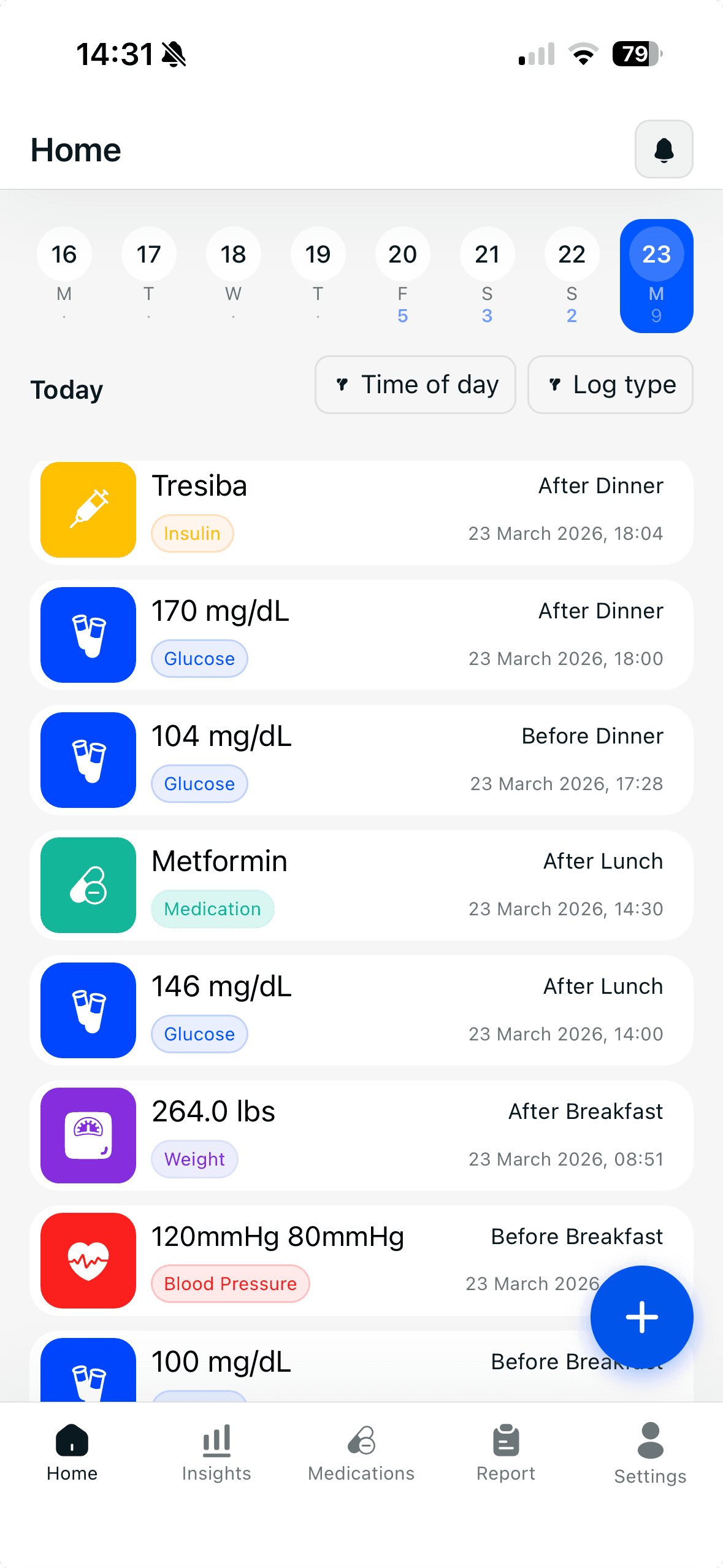
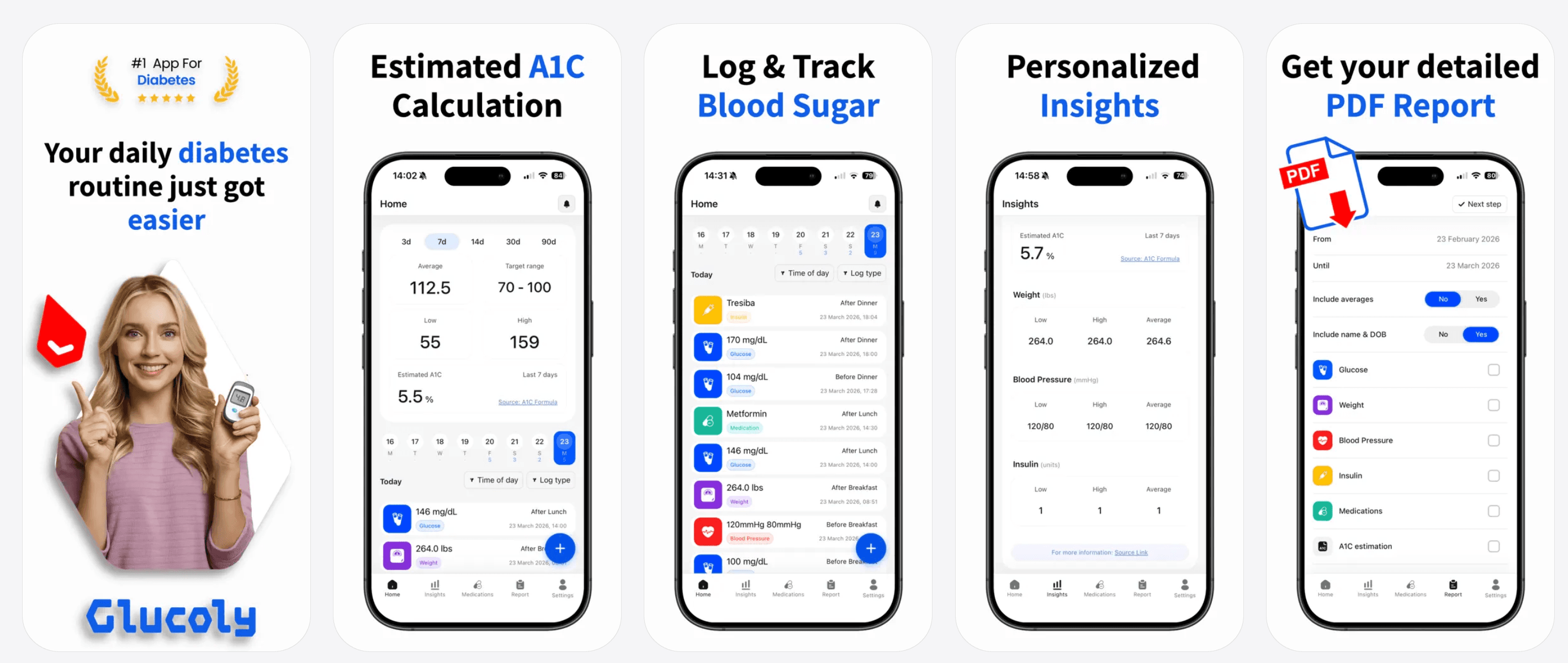
- Use the before/after meal tagging in Glucoly to mark the readings so they're organized in your log.
- If you regularly drink diet sodas, look at your 14-day and 30-day trend views to see whether your overall glucose control is stable.
- Export a PDF from Glucoly and bring your beverage-response data to your next appointment if you have questions.
This article is for general education and is not medical advice. Consult your healthcare provider before making changes to your treatment plan.
Frequently Asked Questions
Does Diet Coke raise blood sugar?
- Diet Coke is sweetened with aspartame, which does not raise blood sugar directly. For most people with diabetes, Diet Coke does not cause a meaningful glucose spike.
- Clinical studies comparing diet beverages to water show no significant difference in post-consumption blood glucose for most individuals.
- If you see a glucose rise after Diet Coke in your own tracking, check the label to confirm you have the correct product (not a 'Coca-Cola Life' or blended variant with real sugar) and consider whether other factors (a recent meal, stress, illness) may explain the reading.
- Diet Coke is substantially better for blood sugar than regular Coca-Cola (39 g sugar per 355 ml can) - but plain water is always the best choice.
Is Coke Zero safe for diabetics?
- Coke Zero Sugar is sweetened with aspartame and acesulfame-K - no sugar, no carbohydrates, no direct blood glucose spike for most people.
- It is a better option than regular Coca-Cola for people with diabetes who want the taste of cola without the glucose hit.
- The same caveats apply: it is a better choice than regular soda, not a health drink. Water, sparkling water, and unsweetened tea are preferable if reducing overall artificial sweetener intake is a goal.
- People with phenylketonuria (PKU) must avoid aspartame - Coke Zero is not appropriate for them.
What drinks can diabetics have?
- Best choices: plain water, sparkling water (plain or naturally flavored with no sugar added), unsweetened herbal tea, black coffee, unsweetened green or black tea.
- Good options: diet sodas (Diet Coke, Coke Zero, Diet Pepsi) sweetened with aspartame, sucralose, or stevia - no direct glucose spike for most people.
- Drink in moderation: low-sugar kombucha (check the label), unsweetened plant milks (oat milk has more carbs than almond milk - check the label).
- Avoid: regular soda, fruit juice, sweetened coffee drinks, energy drinks with sugar, sweetened sports drinks, tonic water - all contain significant rapidly absorbed carbohydrates.
- Alcohol: a separate and complex topic - see the dedicated article on alcohol and blood sugar for guidance.
Sources
- American Diabetes Association. Non-Nutritive Sweeteners. diabetes.org/food-nutrition/understanding-carbs
- American Diabetes Association. Standards of Medical Care in Diabetes 2024. diabetes.org
Log a diet drink and check your glucose response in Glucoly - see exactly how your body responds. Free on the App Store and Google Play.
Download GlucolyShare this article
Related Posts
How Protein Affects Blood Sugar Levels in Diabetes
Protein raises blood sugar slowly and much less than carbs. Learn how gluconeogenesis works, best protein sour…
Read more →NutritionCarb Counting for Diabetes: A Beginner's Step-by-Step Guide
Carb counting helps you manage blood sugar by tracking grams of carbs per meal. This beginner guide covers how…
Read more →NutritionIntermittent Fasting for Type 2 Diabetes: Does It Work?
Intermittent fasting can lower A1C and blood sugar in type 2 diabetes — but carries hypoglycemia risk with ins…
Read more →