Understand why diabetes and high blood pressure occur together, what blood pressure targets to aim for with diabetes, and how tracking both can reduce cardiovascular risk.
High blood pressure (hypertension) affects approximately 73% of adults with type 2 diabetes, according to the American Diabetes Association. The two conditions are closely linked: insulin resistance, common in type 2 diabetes, makes blood vessels stiffer and impairs the kidneys' ability to regulate sodium, both of which raise blood pressure. The ADA recommends a target of below 130/80 mmHg for most people with diabetes to reduce cardiovascular and kidney risk.
In this article
- Why Does Diabetes Cause High Blood Pressure?
- Blood Pressure Targets for People with Diabetes
- Lifestyle Changes That Help Both Blood Sugar and Blood Pressure
- How Medications for Diabetes and Hypertension Overlap
- The Risk of Having Both Conditions Together
- Tracking Blood Pressure Alongside Blood Sugar
- What blood pressure is considered high for a person with diabetes?
- Can managing blood sugar help lower blood pressure?
- At a Glance: Approximately 73% of adults with type 2 diabetes also have high blood pressure, according to the ADA.
- Target blood pressure for most people with diabetes: below 130/80 mmHg, per ADA 2024 guidelines.
- Insulin resistance, a hallmark of type 2 diabetes, directly stiffens blood vessels and raises blood pressure.
- Having both conditions together multiplies cardiovascular risk far beyond either condition alone.
- Many lifestyle changes, including weight loss, reduced sodium intake, and regular exercise, improve both blood sugar and blood pressure simultaneously.
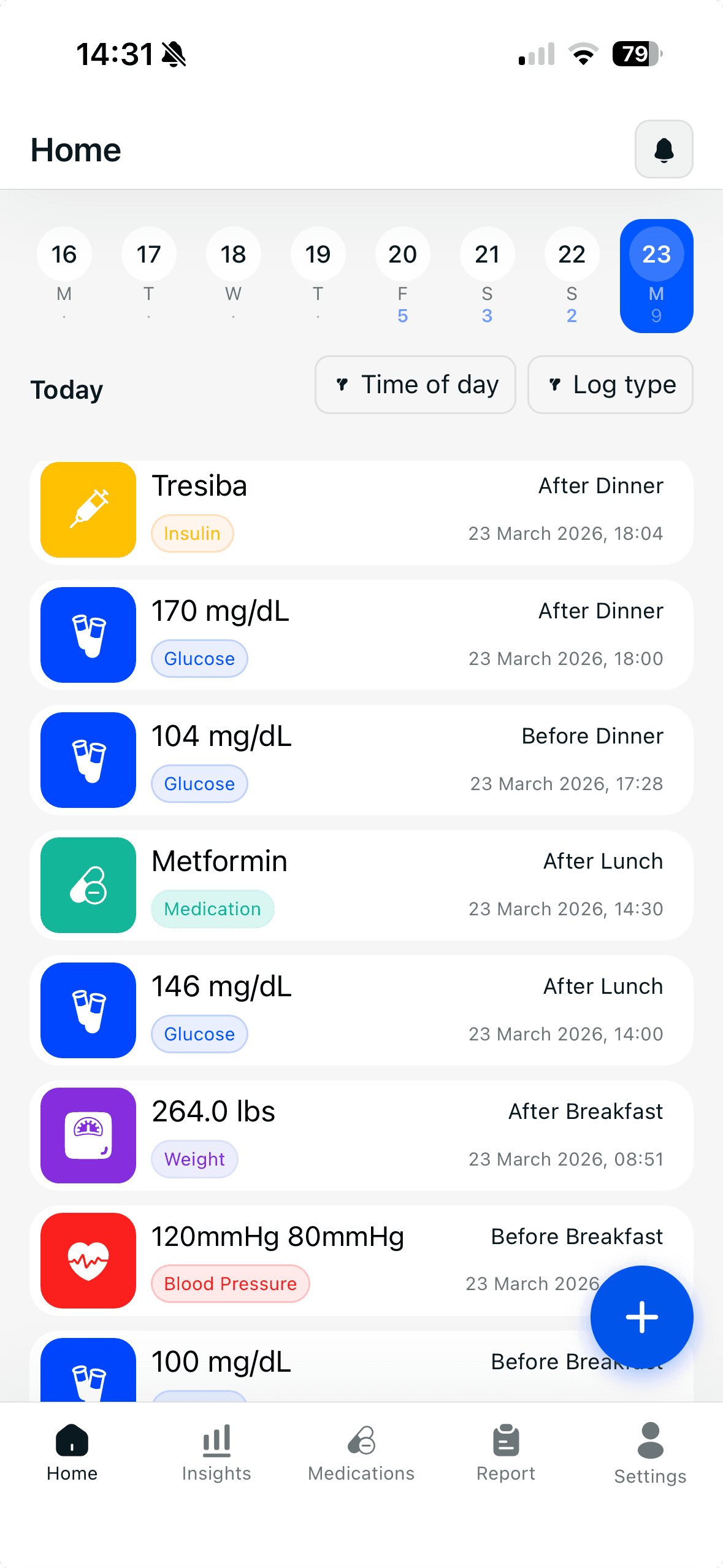
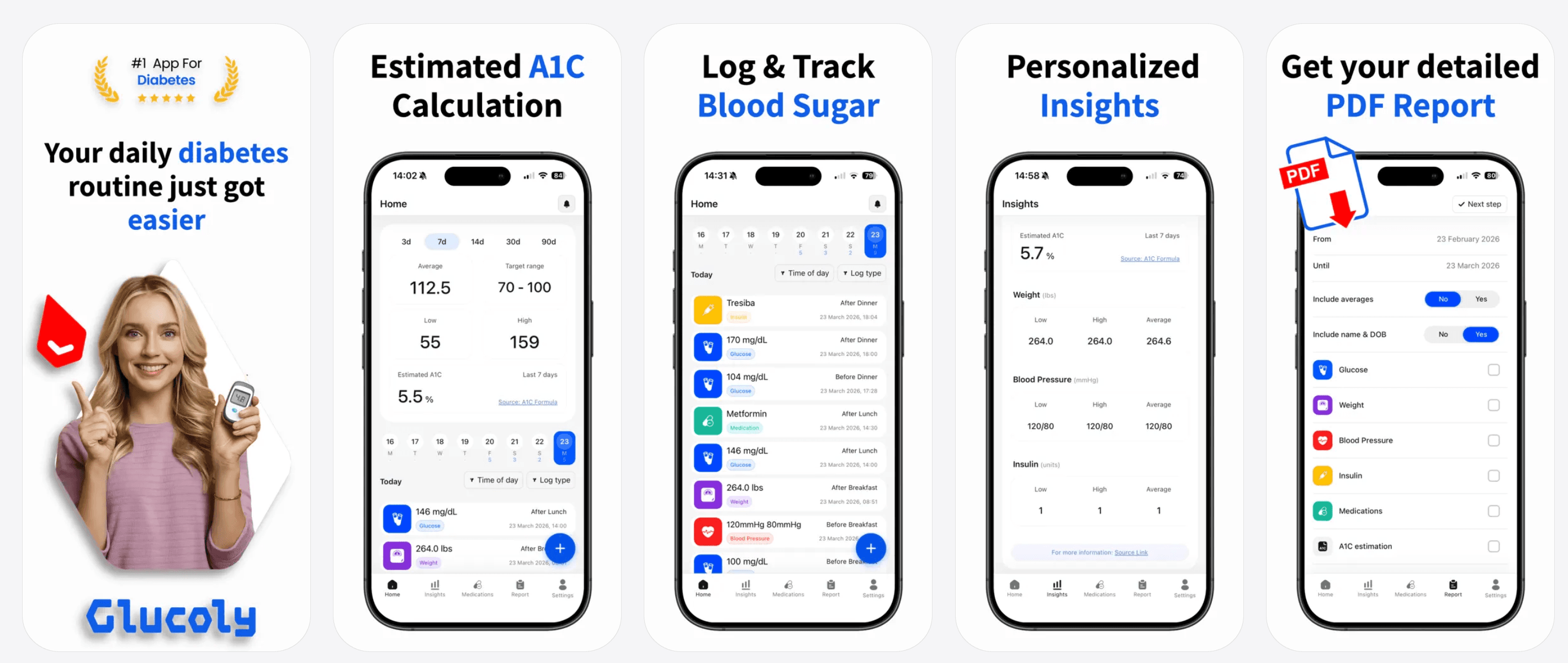
- Glucoly tracks blood pressure readings alongside blood glucose, giving you a combined view of your cardiovascular health.
Why Does Diabetes Cause High Blood Pressure?
The link between type 2 diabetes and hypertension is not coincidental. Several shared biological mechanisms drive both conditions simultaneously.
- Insulin resistance and hyperinsulinemia: elevated insulin levels stimulate the sympathetic nervous system and promote sodium retention in the kidneys, both of which increase blood pressure.
- Vascular stiffness: chronically high blood glucose damages the lining of blood vessels (the endothelium), making them less elastic and increasing the resistance blood must push through.
- Kidney damage: as diabetes progresses, kidney function declines. The kidneys play a central role in blood pressure regulation through fluid and sodium balance.
- Obesity: excess body weight, particularly visceral fat around the abdomen, is a major driver of both insulin resistance and hypertension.
- Chronic inflammation: low-grade inflammation, common in type 2 diabetes, contributes to arterial stiffness and elevated blood pressure.
Blood Pressure Targets for People with Diabetes
For people with diabetes, blood pressure targets are stricter than for the general population because the combination of hypertension and diabetes dramatically increases the risk of heart attack, stroke, and kidney failure.
- General population target (no diabetes): below 140/90 mmHg per most guidelines.
- ADA 2024 target for most people with diabetes: below 130/80 mmHg.
- For people with diabetes at high cardiovascular risk: a target of 120/80 mmHg or below may be appropriate with provider guidance.
- Systolic pressure (the top number) is the stronger predictor of cardiovascular events in people with diabetes.
- A blood pressure reading of 180/110 mmHg or above requires immediate medical attention.
Lifestyle Changes That Help Both Blood Sugar and Blood Pressure
One practical advantage of managing both conditions simultaneously is that many lifestyle interventions address both at once. Improving one typically improves the other.
- Weight loss: losing as little as 5-10% of body weight improves both insulin sensitivity and blood pressure, according to the ADA.
- Reduced sodium intake: the American Heart Association recommends less than 2,300 mg of sodium per day for most adults. People with diabetes and hypertension may benefit from less than 1,500 mg per day.
- Regular aerobic exercise: 150 minutes per week of moderate-intensity exercise improves both glycemic control and blood pressure. Walking, cycling, and swimming are accessible options.
- DASH or Mediterranean diet: both dietary patterns reduce blood pressure and improve blood sugar control, emphasizing vegetables, legumes, whole grains, and limited processed foods.
- Reducing alcohol: alcohol raises blood pressure and can cause unpredictable glucose swings. Limiting intake benefits both conditions.
- Quitting smoking: smoking stiffens blood vessels and worsens both cardiovascular risk and insulin resistance.
How Medications for Diabetes and Hypertension Overlap
Several drug classes treat one condition while benefiting the other, allowing people with both conditions to consolidate their treatment plans.
- ACE inhibitors and ARBs (such as lisinopril and losartan): the ADA recommends these as first-line blood pressure medications for people with diabetes, as they also protect kidney function.
- SGLT2 inhibitors (such as empagliflozin and dapagliflozin): primarily used for blood sugar control, these medications also lower blood pressure by promoting sodium and fluid excretion through the urine.
- GLP-1 receptor agonists (such as semaglutide): approved for type 2 diabetes, these also reduce blood pressure and cardiovascular events, as demonstrated in the LEADER and SUSTAIN-6 trials.
- Beta-blockers and calcium channel blockers may also be prescribed; your cardiologist or endocrinologist should guide medication selection based on your full clinical picture.
- Never adjust or discontinue medications on your own. All changes should be made in partnership with your healthcare provider.
The Risk of Having Both Conditions Together
The combination of high blood pressure and diabetes is particularly dangerous. According to the American Heart Association, people with both conditions are twice as likely to develop cardiovascular disease and four times as likely to develop end-stage kidney disease compared to people with neither condition.
The two conditions accelerate each other's complications. High blood sugar damages blood vessel walls, making them more vulnerable to the mechanical stress of elevated blood pressure. High blood pressure accelerates kidney damage in diabetes. Managing both conditions aggressively is essential for long-term health.
Tracking Blood Pressure Alongside Blood Sugar
Glucoly tracks blood pressure readings alongside blood glucose, estimated A1C, insulin, weight, and medications. Logging both in one place lets you see whether blood pressure spikes correlate with blood sugar highs, whether a lifestyle change is improving both metrics, and gives your doctor a richer picture at each visit.
The doctor-ready PDF export in Glucoly covers blood pressure alongside all other logged metrics, so you arrive at each appointment with a complete, time-stamped record.
This article is for general education and is not medical advice. Consult your healthcare provider before making changes to your treatment plan. Blood pressure targets should be set individually in consultation with your care team.
Frequently Asked Questions
What blood pressure is considered high for a person with diabetes?
- The ADA 2024 guidelines recommend a blood pressure target of below 130/80 mmHg for most people with diabetes.
- A reading at or above 130/80 mmHg on multiple occasions indicates hypertension requiring attention in the context of diabetes.
- A single elevated reading does not confirm hypertension. Diagnosis is based on repeated elevated measurements.
- Home blood pressure monitoring and logging readings in Glucoly gives your doctor a more accurate picture than an occasional clinic measurement.
Can managing blood sugar help lower blood pressure?
- Yes, to a degree. Improving blood sugar control reduces vascular inflammation and stiffness, which can modestly lower blood pressure.
- SGLT2 inhibitors, a class of diabetes medications, reduce blood pressure alongside blood sugar by promoting fluid and sodium excretion.
- However, blood pressure usually requires its own management strategy. Most people with both conditions need blood pressure medications in addition to diabetes management.
- Lifestyle changes, particularly weight loss, reduced sodium, and regular exercise, are the most effective shared lever for improving both numbers simultaneously.
Sources
- American Diabetes Association. Standards of Medical Care in Diabetes 2024. diabetes.org
- American Heart Association. High Blood Pressure. heart.org/en/health-topics/high-blood-pressure
- Marso SP, et al. Liraglutide and Cardiovascular Outcomes in Type 2 Diabetes (LEADER). New England Journal of Medicine. 2016.
- Marso SP, et al. Semaglutide and Cardiovascular Outcomes in Patients with Type 2 Diabetes (SUSTAIN-6). New England Journal of Medicine. 2016.
Track your blood sugar and spot patterns with Glucoly - free on iOS and Android.
Download GlucolyShare this article
Related Posts
What Is LADA (Type 1.5 Diabetes)? Symptoms and How It Differs from Type 1 and Type 2
LADA (type 1.5 diabetes) is autoimmune diabetes that develops slowly in adults, often misdiagnosed as type 2.…
Read more →EducationDiabetic Retinopathy: How Diabetes Affects Your Eyes (and How to Protect Them)
Diabetic retinopathy is the leading cause of blindness in adults — largely preventable. Learn the stages, symp…
Read more →EducationWhat Is Diabetic Ketoacidosis (DKA)? Warning Signs You Must Know
DKA is a life-threatening diabetes emergency. Know the warning signs — fruity breath, vomiting, confusion — an…
Read more →