Learn how oral glucose treats low blood sugar, how the ADA 15-15 Rule works, why glucose tablets are superior to food, and when to call 911 instead.
Oral glucose refers to fast-acting carbohydrates taken by mouth to raise blood sugar during a hypoglycemic episode - a reading below 70 mg/dL (3.9 mmol/L). Common forms include glucose tablets, glucose gel, fruit juice, regular soda, or sugar. Oral glucose works within 15 minutes in most cases and is the first-line treatment for mild to moderate low blood sugar in people with diabetes.
In this article
- What Counts as Oral Glucose
- The 15-15 Rule (ADA Standard Protocol)
- Why Glucose Tablets Are Better Than Food for Treating Lows
- Hypoglycemia Severity Levels
- When NOT to Use Oral Glucose
- What to Carry and Where to Keep Glucose
- Logging Hypo Events in Glucoly
- What is the fastest way to raise blood sugar?
- How many glucose tablets for hypoglycemia?
- What blood sugar level requires treatment?
- At a Glance: Hypoglycemia is defined as blood sugar below 70 mg/dL (3.9 mmol/L) - treat immediately.
- The ADA 15-15 Rule: take 15g of fast-acting carbs, wait 15 minutes, recheck. Repeat if still below 70 mg/dL.
- Glucose tablets (typically 4g each) are the gold standard - precise dose, fast absorption, no fat to slow them.
- Severe hypoglycemia with confusion or unconsciousness requires glucagon - not oral glucose.
- Always carry 15–20g of fast-acting carbs (3–5 glucose tablets) with you at all times.
- Log every hypo event in Glucoly to spot patterns by time of day, activity, or meal timing.
What Counts as Oral Glucose
Oral glucose includes any carbohydrate source that is absorbed quickly from the digestive tract into the bloodstream. The key word is 'fast-acting' - fat, fiber, and protein all slow glucose absorption, which is why a chocolate bar is not an ideal hypoglycemia treatment despite containing sugar.
- Glucose tablets: typically 4g of pure glucose each - the most predictable and portable option.
- Glucose gel: convenient single-serve packets, often 15g per pack - useful if swallowing tablets is difficult.
- Fruit juice: 125ml (4oz) of orange or apple juice provides approximately 15g of carbohydrates.
- Regular soda (not diet): 150ml (5oz) provides approximately 15g of carbs - cola or lemon-lime soda.
- Sugar or honey: 1 tablespoon (approximately 15g of carbs) - effective but less precise to portion.
- Glucose candy: products such as Smarties (US) or Dextro Energy are also appropriate.
The 15-15 Rule (ADA Standard Protocol)
The American Diabetes Association recommends the 15-15 Rule as the standard protocol for treating mild to moderate hypoglycemia. The rule exists because overtreating a low - eating 60g of carbs instead of 15 - is extremely common and causes rebound hyperglycemia. Precise dosing leads to a faster return to target range with less spiking afterward.
- Step 1: Consume 15g of fast-acting carbohydrates immediately.
- Step 2: Wait 15 minutes.
- Step 3: Recheck your blood glucose.
- Step 4: If still below 70 mg/dL (3.9 mmol/L), take another 15g and wait 15 more minutes.
- Step 5: Once blood sugar is above 70 mg/dL, eat a small snack with both carbs and protein if your next meal is more than an hour away.
Why Glucose Tablets Are Better Than Food for Treating Lows
When blood sugar is low, the instinct is often to eat something - but most foods are actually poor hypo treatments compared to glucose tablets.
- Precise dosing: each tablet is clearly labeled (usually 4g), so you know exactly how many grams you are taking. A handful of crackers or a banana has variable, often underestimated carb content.
- Fast absorption: pure glucose requires no digestion - it is absorbed directly from the small intestine. Foods containing fat, protein, or fiber slow gastric emptying and delay glucose entry into the bloodstream.
- Portable and stable: glucose tablets do not melt, spoil, or require refrigeration - unlike juice boxes or candy that may leak.
- No calorie creep: overtreating lows with food is one of the hidden drivers of weight gain and rebound hyperglycemia in diabetes management.
Hypoglycemia Severity Levels
Understanding the three levels of hypoglycemia guides the correct treatment response.
- Mild hypoglycemia: blood sugar 54–70 mg/dL (3.0–3.9 mmol/L). Symptoms include shakiness, sweating, hunger, and rapid heartbeat. Person is conscious and can self-treat with oral glucose using the 15-15 Rule.
- Moderate hypoglycemia: blood sugar below 54 mg/dL (3.0 mmol/L). Symptoms include confusion, difficulty concentrating, mood changes, slurred speech. Person may need assistance. Oral glucose is still appropriate if the person can swallow safely.
- Severe hypoglycemia: blood sugar very low with loss of consciousness, seizure, or inability to swallow safely. Do NOT use oral glucose - choking risk is high. Requires glucagon (injection kit or nasal spray) and calling emergency services.
When NOT to Use Oral Glucose
Oral glucose is not appropriate in every situation. If someone is severely hypoglycemic and cannot follow instructions, is confused or unresponsive, is having a seizure, or cannot swallow safely - do not attempt to put anything in their mouth.
- Use glucagon immediately: injection kit (GlucaGen, Baqsimi nasal spray, Gvoke auto-injector) - all are available by prescription.
- Call emergency services (911): do not delay if glucagon is not available or the person does not respond.
- Turn the person on their side: to prevent choking or aspiration while waiting for help.
- Make sure family members and coworkers know where your glucagon is stored and how to use it.
What to Carry and Where to Keep Glucose
Running out of glucose during a hypoglycemic episode is a preventable medical emergency. Building redundancy into your daily routine eliminates this risk entirely.
- In your bag or purse: 1 tube of glucose tablets (10–15 tablets) or 1–2 glucose gel packets.
- In your car glovebox: a tube of glucose tablets - gel packets hold up better in heat.
- At bedside: glucose tablets or juice boxes for nocturnal hypoglycemia, which can happen during sleep.
- At your desk: a small stock for workplace lows.
- Target: always have at least 15–20g of fast-acting carbohydrates within reach at all times.
Logging Hypo Events in Glucoly
Every hypoglycemic episode contains information. Do your lows happen after exercise? In the late afternoon? After certain meals? Without data, these patterns stay invisible - and the next low becomes harder to prevent.
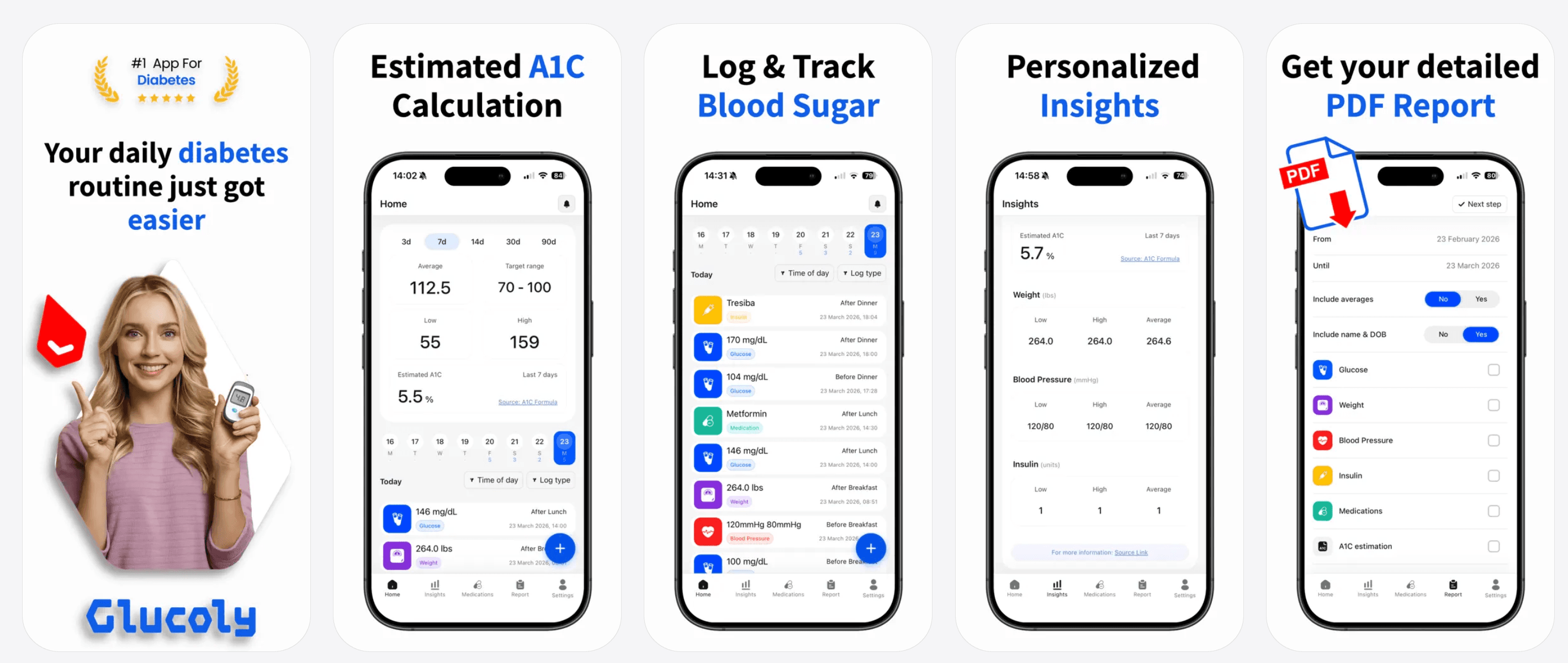
In Glucoly, you can log each glucose reading with context - the time of day, before or after a meal tag, and insulin doses. Over time, the 7-day and 14-day trend views reveal clusters of low readings. This is one of the most useful datasets you can bring to an endocrinologist appointment - it transforms reactive low-management into proactive prevention.
This article is for general education only and is not a substitute for personalized medical advice. Consult your healthcare provider before making changes to your treatment plan. In a medical emergency, call 911.
Frequently Asked Questions
What is the fastest way to raise blood sugar?
- The fastest way to raise blood sugar is to consume pure glucose - glucose tablets or glucose gel are absorbed directly and typically raise blood sugar within 10–15 minutes.
- Fruit juice and regular soda are slightly slower due to fructose content but are still effective and widely available.
- Avoid high-fat options like chocolate or peanut butter - fat slows gastric emptying significantly, delaying glucose entry into the bloodstream.
- Always follow the ADA 15-15 Rule: 15g of fast-acting carbs, wait 15 minutes, recheck.
How many glucose tablets for hypoglycemia?
- The ADA recommends 15g of fast-acting carbohydrates to treat mild to moderate hypoglycemia.
- Most standard glucose tablets are 4g each - so approximately 3–4 tablets (12–16g) hits the 15g target.
- Check your specific brand: some tablets are 2.5g each (needing 6 tablets) or 5g each (needing 3). Always read the label.
- Recheck after 15 minutes - if still below 70 mg/dL (3.9 mmol/L), take another 15g and wait again.
What blood sugar level requires treatment?
- The American Diabetes Association recommends treating hypoglycemia when blood sugar falls below 70 mg/dL (3.9 mmol/L).
- Some individuals - especially those with hypoglycemia unawareness or frequent lows - may have individualized treatment thresholds set by their provider.
- Readings below 54 mg/dL (3.0 mmol/L) are considered clinically significant hypoglycemia and require prompt treatment.
- Severe hypoglycemia with altered consciousness requires glucagon or emergency services - not oral glucose.
Sources
- American Diabetes Association. Standards of Medical Care in Diabetes 2024. diabetes.org
- Centers for Disease Control and Prevention. Low Blood Sugar (Hypoglycemia). cdc.gov/diabetes/treatment
- National Health Service. Low blood sugar (hypoglycemia). nhs.uk/conditions/low-blood-sugar-hypoglycaemia
Tracking your blood sugar lows in Glucoly helps you and your care team spot patterns and prevent the next one. Free on the App Store and Google Play.
Download GlucolyShare this article
Related Posts
What Is LADA (Type 1.5 Diabetes)? Symptoms and How It Differs from Type 1 and Type 2
LADA (type 1.5 diabetes) is autoimmune diabetes that develops slowly in adults, often misdiagnosed as type 2.…
Read more →EducationDiabetic Retinopathy: How Diabetes Affects Your Eyes (and How to Protect Them)
Diabetic retinopathy is the leading cause of blindness in adults — largely preventable. Learn the stages, symp…
Read more →EducationWhat Is Diabetic Ketoacidosis (DKA)? Warning Signs You Must Know
DKA is a life-threatening diabetes emergency. Know the warning signs — fruity breath, vomiting, confusion — an…
Read more →