Protein raises blood sugar slowly and much less than carbs. Learn how gluconeogenesis works, best protein sources for diabetes, and CGM patterns to watch.
Protein has a small but real effect on blood sugar — approximately 50–60% of protein can be converted to glucose through gluconeogenesis if eaten in large amounts, raising blood sugar slowly 3–4 hours after eating. However, this effect is much smaller than carbohydrates and is usually offset by protein's ability to stimulate insulin release. For most people with diabetes, protein is a blood-sugar-friendly macronutrient, but very high protein portions can cause delayed glucose rises.
In this article
- How Protein Affects Blood Sugar: The Mechanism
- Protein and Blood Sugar: What the Research Shows
- High-Protein Diets and Diabetes
- Best Protein Sources for People with Diabetes
- Protein and the Low-Carb / Ketogenic Diet in Diabetes
- Protein and Kidney Health in Diabetes
- How to Use Protein to Manage Blood Sugar After Meals
- Does protein spike blood sugar like carbs do?
- Should I count protein grams like I count carbs?
- Is a high-protein diet safe for people with diabetes?
At a Glance
- Protein raises blood sugar much less than carbohydrates — the effect is delayed (3–5 hours after eating) and smaller.
- Approximately 50–60% of protein may be converted to glucose via gluconeogenesis, but this is dose-dependent — normal portions rarely cause significant spikes.
- Protein stimulates both insulin and glucagon release — the net effect on blood sugar is usually modest.
- High-protein meals can cause delayed post-meal rises that appear on CGM hours after eating.
- Protein is blood-sugar-friendly as a replacement for carbohydrates — swapping carbs for protein generally improves post-meal glucose.
- People with kidney disease may need to limit protein — discuss with your healthcare team.
How Protein Affects Blood Sugar: The Mechanism
When you eat protein, your digestive system breaks it down into amino acids, which are absorbed into the bloodstream. Some of these amino acids — particularly alanine and glutamine — travel to the liver, where they can be converted into glucose through a process called gluconeogenesis. This is the primary pathway by which protein influences blood sugar. Unlike carbohydrates, which raise glucose rapidly within 30–90 minutes of eating, the glucose produced from protein appears gradually, typically 3–5 hours after a meal.
- Gluconeogenesis: the liver converts amino acids from protein into glucose — this is the primary mechanism by which protein raises blood sugar.
- Gluconeogenesis occurs primarily when protein is eaten in large quantities, carbohydrate intake is very low (such as on a ketogenic diet), or cortisol levels are elevated.
- The glucose from gluconeogenesis appears 3–5 hours after eating — this is why protein can cause a delayed glucose rise visible on a continuous glucose monitor (CGM).
- Protein also stimulates glucagon release, which signals the liver to release stored glucose — but simultaneously stimulates insulin release, which normally offsets this effect in people with functioning beta cells.
Protein and Blood Sugar: What the Research Shows
The research on protein and blood sugar in diabetes is nuanced. The quantity of protein, the type of protein, what it is eaten with, and whether someone has type 1 or type 2 diabetes all influence the outcome. Here is what the evidence consistently shows.
- In people with type 2 diabetes, replacing carbohydrates with protein generally improves post-meal blood sugar and A1C over time.
- Large protein meals (50g or more in one sitting) can cause detectable blood sugar rises 3–5 hours later in people with type 1 diabetes who use insulin.
- A meta-analysis of low-carb, high-protein diets showed significant A1C reductions in type 2 diabetes — primarily from the carbohydrate reduction, with protein playing a supporting role.
- Protein consumed alongside carbohydrates slows carbohydrate digestion, blunting the post-meal glucose peak compared to eating carbohydrates alone.
- Whey protein (found in dairy) appears to be more insulinogenic than casein, red meat, or plant proteins — it stimulates more insulin release per gram of protein consumed.
High-Protein Diets and Diabetes
Low-carbohydrate, high-protein diets have significant evidence for blood sugar improvement in type 2 diabetes. Replacing starchy carbohydrates with protein and fat reduces the total glucose load per meal, leading to lower post-meal spikes and improved overall glycaemic control. However, there are important considerations for different groups of people with diabetes.
- A1C reductions: studies consistently show 0.5–1.0% A1C reduction with low-carb, high-protein approaches in type 2 diabetes.
- Weight loss: high-protein diets increase satiety and reduce total calorie intake, supporting weight loss that independently improves insulin sensitivity.
- Insulin users should be aware that large protein meals may require a delayed bolus dose to cover the delayed glucose rise — discuss this with your diabetes team.
- Very high protein diets (above 2g per kilogram of body weight per day) may worsen kidney function in people with existing diabetic nephropathy.
- Plant-based protein sources (legumes, tofu, nuts, and seeds) provide additional fibre benefits that further improve blood sugar control and gut health.
Best Protein Sources for People with Diabetes
- Fatty fish (salmon, mackerel, sardines): omega-3 fatty acids reduce inflammation and provide cardiovascular benefits alongside high-quality protein.
- Eggs: nutrient-dense, minimal blood sugar impact, and highly versatile for any meal of the day.
- Legumes (lentils, chickpeas, black beans): a unique combination of protein and fibre that significantly slows glucose absorption.
- Skinless chicken and turkey breast: lean, high in protein, and low in saturated fat.
- Greek yogurt (plain, full-fat): protein plus beneficial bacteria for gut health — choose unsweetened varieties.
- Tofu and tempeh: excellent plant-based protein sources with very low carbohydrate content.
- Nuts and seeds (almonds, walnuts, pumpkin seeds): protein, healthy fat, and fibre in one convenient package.
- Cottage cheese: high in protein and lower in fat — a practical option for snacks or light meals.
Protein and the Low-Carb / Ketogenic Diet in Diabetes
On a ketogenic diet (under 50g of carbohydrates per day), protein intake becomes more significant for blood sugar management. When carbohydrates are very low, the body relies more heavily on gluconeogenesis — converting protein to glucose — to maintain baseline blood sugar levels. Excess protein on a ketogenic diet can prevent full ketosis and cause delayed glucose rises that are visible on a CGM. The recommended protein intake on therapeutic ketogenic diets for diabetes is typically 1.2–1.7g per kilogram of body weight per day — enough to preserve muscle mass without triggering excessive gluconeogenesis.
Protein and Kidney Health in Diabetes
Diabetic kidney disease (diabetic nephropathy) is a common complication of long-standing diabetes, and protein intake becomes more important to manage in this context. The kidneys filter the byproducts of protein metabolism — primarily urea and creatinine. In people with normal kidney function, standard to moderately high protein intake is safe and beneficial. For those with reduced kidney function (eGFR under 60 mL/min), limiting protein to 0.8g per kilogram of body weight per day is generally recommended to slow the progression of kidney disease. Always discuss protein targets with your nephrologist or diabetes team if you have any signs of kidney involvement.
How to Use Protein to Manage Blood Sugar After Meals
- Include protein at every meal — it slows gastric emptying and blunts post-meal glucose peaks caused by carbohydrates.
- Pair protein with carbohydrates rather than eating carbohydrates alone — the combination raises blood sugar more slowly and sustains energy longer.
- Use protein as a snack: a boiled egg, a handful of nuts, or plain Greek yogurt can stabilise blood sugar between meals.
- If using a CGM, experiment with protein portions to observe how your glucose responds 3–5 hours after a high-protein meal — this helps you personalise your approach.
- For type 1 insulin users: large protein meals (over 40g of protein) may require a small extended bolus to cover delayed glucose — discuss this with your diabetes team.
- Do not cut protein to reduce gluconeogenesis — adequate protein is essential for muscle preservation, immune function, and overall health.
Frequently Asked Questions
Does protein spike blood sugar like carbs do?
No — protein does not spike blood sugar rapidly the way carbohydrates do. Its effect on blood sugar is smaller, slower, and more variable. A normal protein portion (20–30g at a meal) typically raises blood sugar minimally. Very large protein portions (50g or more) can cause a delayed, modest glucose rise 3–5 hours after eating. This is most relevant for people with type 1 diabetes who fine-tune insulin dosing with a CGM.
Should I count protein grams like I count carbs?
Most people with type 2 diabetes do not need to count protein grams. Eating adequate protein at each meal naturally supports blood sugar stability. People with type 1 diabetes on a CGM who notice delayed glucose rises after high-protein meals may benefit from tracking protein in certain situations — particularly at breakfast or for large protein-heavy meals. Your diabetes educator can advise on whether protein bolusing is relevant for your individual management.
Is a high-protein diet safe for people with diabetes?
For most people with diabetes and normal kidney function, a moderate to high protein diet (1.2–1.6g per kilogram of body weight per day) is safe and beneficial for blood sugar control. It is not appropriate for people with diabetic nephropathy (reduced kidney function), where protein restriction is recommended. Before making major dietary changes, discuss with your diabetes team — especially if you take insulin or medications that require dose adjustment when your diet changes significantly.
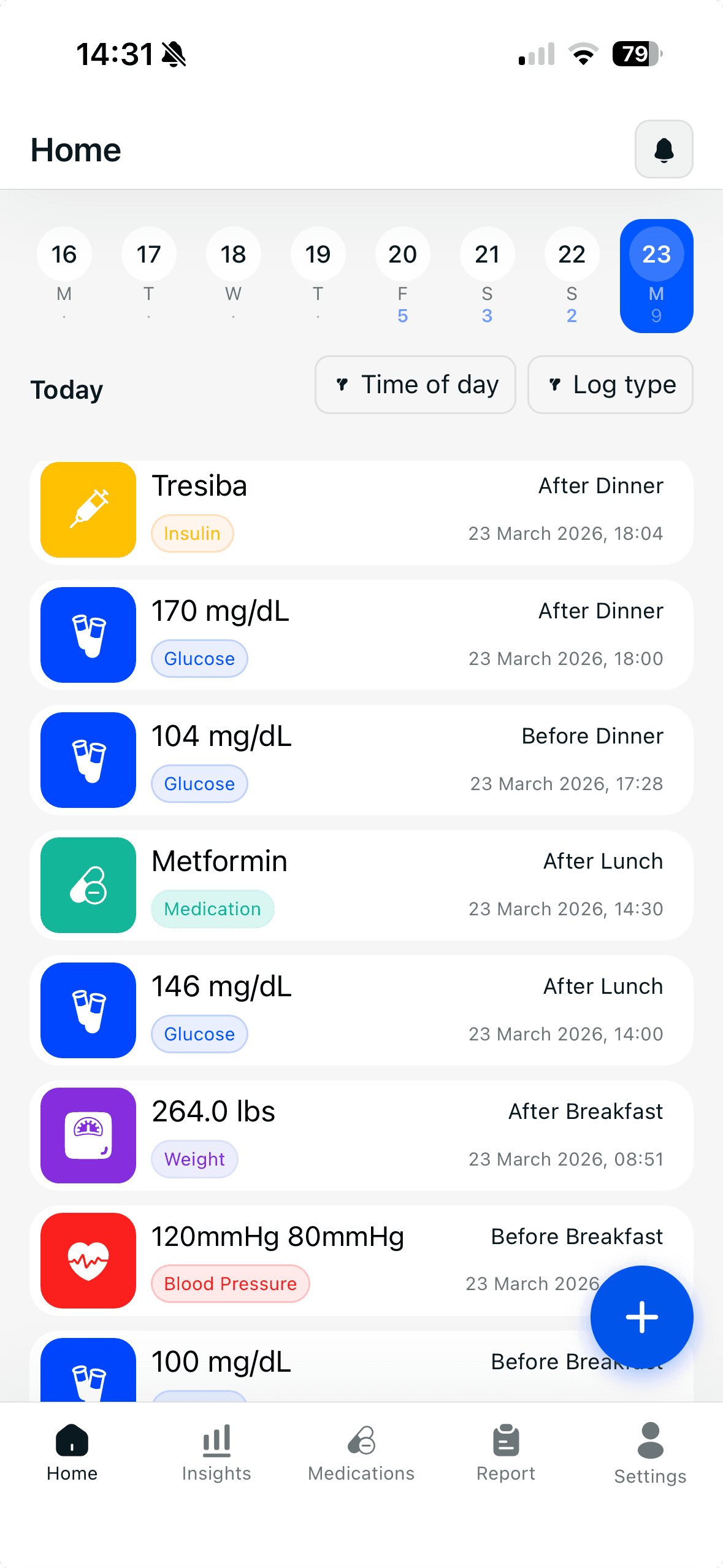
See how protein, carbs, and activity move your numbers by logging meals and glucose in Glucoly — free to download with unlimited logging, plus Glucoly Premium for estimated A1C and detailed reports.
Download GlucolySources
- American Diabetes Association (ADA) — diabetes.org
- Diabetes UK — diabetes.org.uk
- Harvard T.H. Chan School of Public Health — hsph.harvard.edu
- National Institute of Diabetes and Digestive and Kidney Diseases (NIDDK) — niddk.nih.gov
Share this article
Related Posts
Carb Counting for Diabetes: A Beginner's Step-by-Step Guide
Carb counting helps you manage blood sugar by tracking grams of carbs per meal. This beginner guide covers how…
Read more →NutritionIntermittent Fasting for Type 2 Diabetes: Does It Work?
Intermittent fasting can lower A1C and blood sugar in type 2 diabetes — but carries hypoglycemia risk with ins…
Read more →Nutrition7-Day Diabetes Meal Plan for Beginners (With Grocery List)
A simple 7-day diabetes meal plan with breakfast, lunch, dinner, snacks, and a full grocery list. Designed for…
Read more →