The dawn phenomenon causes blood sugar to rise in the early morning hours due to hormones - not food. Learn why it happens and how to manage morning highs.
The dawn phenomenon is a natural rise in blood sugar that occurs between roughly 3 a.m. and 8 a.m., caused by a surge of hormones - primarily cortisol and growth hormone - that signal the liver to release stored glucose. In people without diabetes, a matching rise in insulin keeps blood sugar steady. In people with Type 1 or Type 2 diabetes, that insulin response is impaired, so glucose climbs and you wake up with a higher reading than when you went to bed.
In this article
- What Causes the Dawn Phenomenon?
- Dawn Phenomenon vs. the Somogyi Effect
- Who Experiences the Dawn Phenomenon?
- Why Morning Highs Matter for the Rest of Your Day
- How to Detect the Dawn Phenomenon
- Management Strategies for the Dawn Phenomenon
- How Glucoly Helps You Spot and Track the Pattern
- Is the dawn phenomenon the same as the Somogyi effect?
- Can you prevent the dawn phenomenon?
- What blood sugar level is normal in the morning?
- At a Glance: The dawn phenomenon is driven by hormones, not food - you haven't eaten anything yet.
- It affects both Type 1 and Type 2 diabetes; non-diabetics experience it too but their insulin response compensates.
- Typical timing: blood sugar begins rising between 3–4 a.m. and peaks around waking.
- It is distinct from the Somogyi effect - checking at 3 a.m. tells the difference.
- Management options include adjusting long-acting insulin timing (T1D), medication timing (T2D), and evening habits.
- Consistent morning logging in Glucoly over 7–14 days reveals whether the pattern is real and persistent.
What Causes the Dawn Phenomenon?
In the early morning hours, your body begins preparing for the day by releasing a wave of counter-regulatory hormones: cortisol, growth hormone, glucagon, and epinephrine. These hormones are part of your circadian rhythm - they help mobilize energy so you're ready to get up and move.
One key effect of these hormones is signaling the liver to release glucose from its glycogen stores - a process called hepatic glucose output. In a healthy pancreas, the corresponding rise in insulin neutralizes this glucose release. In diabetes, insulin production or sensitivity is insufficient, so the released glucose accumulates in the bloodstream.
- Cortisol: peaks in the early morning and reduces insulin sensitivity, making it harder for cells to absorb glucose.
- Growth hormone: released in pulses during sleep; stimulates the liver to produce and release glucose.
- Glucagon: signals the liver to break down glycogen stores into glucose.
- The combined effect can raise fasting glucose by 20–40 mg/dL (1.1–2.2 mmol/L) above the overnight baseline.
Dawn Phenomenon vs. the Somogyi Effect
These two patterns both result in elevated morning blood sugar, but they have opposite causes. The Somogyi effect (also called rebound hyperglycemia) occurs when blood sugar drops too low overnight - often from too much evening insulin - and the body overcorrects by flooding the bloodstream with glucose. The dawn phenomenon, by contrast, occurs without any overnight low.
The simplest way to tell them apart is to set an alarm and check your glucose at 3 a.m. for a few nights. According to the American Diabetes Association, if your reading is low at 3 a.m. and high in the morning, a Somogyi rebound is likely. If your 3 a.m. reading is already normal or rising, the dawn phenomenon is the more probable cause.
- Dawn phenomenon: glucose is normal or slightly elevated at 3 a.m. and continues rising until wake-up.
- Somogyi effect: glucose is low (below 70 mg/dL / 3.9 mmol/L) at 3 a.m. and rebounds high by morning.
- CGM users: overnight trend data from a Dexcom or Libre sensor - synced via Apple Health into Glucoly - makes this distinction easy without alarm-clock finger sticks.
- If you're unsure which pattern you have, ask your healthcare provider before adjusting any medication.
Who Experiences the Dawn Phenomenon?
The dawn phenomenon is not exclusive to diabetes - virtually everyone experiences the underlying hormonal surge. The difference is in the outcome. In people without diabetes, a healthy pancreas releases just enough extra insulin to offset the liver's glucose output, and fasting blood sugar stays within a normal range (below 100 mg/dL / 5.6 mmol/L).
In people with Type 1 diabetes, there is no endogenous insulin production to meet that morning surge. In Type 2 diabetes, insulin resistance means more insulin would be needed to have the same effect - and either the pancreas can't keep up or oral medications aren't active enough at that hour.
- Type 1 diabetes: particularly common; the fixed overnight basal rate may not be sufficient to counter the morning hormone surge.
- Type 2 diabetes: especially pronounced in those with higher insulin resistance or whose oral medications have worn off overnight.
- Non-diabetics: experience the hormone surge but compensate automatically - glucose stays in range.
- Severity varies widely: some people see a 10–20 mg/dL bump; others see rises of 50 mg/dL (2.8 mmol/L) or more.
Why Morning Highs Matter for the Rest of Your Day
Starting the day with elevated glucose sets the tone for the entire day's curve. A fasting reading that is already at the high end of your target range means you have less buffer before meals push you higher. Research published in *Diabetes Care* has linked persistent morning hyperglycemia to higher overall A1C and increased risk of cardiovascular complications.
Practically speaking, a high waking glucose can make you feel fatigued and foggy at the start of the day - and can complicate breakfast dosing decisions for those on insulin. Understanding that the cause is hormonal (not a late-night snack or a skipped dose) helps you address it correctly rather than overreacting.
- Higher fasting glucose means a smaller safe window before post-meal spikes push into hyperglycemic territory.
- Persistent morning highs contribute to a higher estimated A1C - even if daytime control is good.
- Insulin users may be tempted to dose extra at breakfast, which can cause a mid-morning low if the issue is actually the dawn hormone surge.
How to Detect the Dawn Phenomenon
Identifying the pattern requires at least a week of consistent data. A single high fasting reading proves nothing - illness, a late meal, or stress could explain it just as easily. Look for a repeating pattern of elevated waking glucose across multiple mornings.
- Finger-stick approach: check glucose at bedtime, again at 3 a.m., and again at waking on several consecutive nights. If levels are rising from 3 a.m. onward without any overnight low, the dawn phenomenon is likely.
- CGM approach: Dexcom and Libre sensors stream continuous data that shows the exact time your glucose begins climbing overnight - no alarm clock required. If you sync your CGM via Apple Health, that data flows directly into Glucoly.
- Glucoly's 14-day and 30-day trend windows let you compare fasting readings across days to confirm whether the pattern is consistent.
- Share the trend data with your doctor or diabetes care team - they will want to see the overnight curve before recommending any medication change.
Management Strategies for the Dawn Phenomenon
There is no single fix - the right approach depends on your type of diabetes and your current treatment plan. Always work with your healthcare provider before changing any insulin doses or medications.
- Type 1 diabetes - insulin pump users: a programmable basal rate increase in the pre-dawn hours (often 2–4 a.m.) is one of the most precise ways to counter the surge. Your endocrinologist or diabetes educator can help set this.
- Type 1 diabetes - multiple daily injections: shifting your long-acting (basal) insulin injection to bedtime rather than morning may extend its peak coverage into the dawn window. Discuss timing with your care team.
- Type 2 diabetes - oral medications: some medications (including certain GLP-1 receptor agonists and SGLT2 inhibitors) have profiles that can reduce morning glucose. Timing of existing medications may also be adjustable.
- Evening snack choices: a small, low-carbohydrate, high-protein snack before bed (such as a handful of nuts or a slice of cheese) may blunt the liver's overnight glucose output in some people with T2D - but this is not universal.
- Light exercise before bed: a short walk or gentle activity in the evening can improve insulin sensitivity and modestly reduce the morning spike for some people.
- Avoid high-carbohydrate late-night meals: a large carbohydrate load close to bedtime can compound morning highs.
How Glucoly Helps You Spot and Track the Pattern
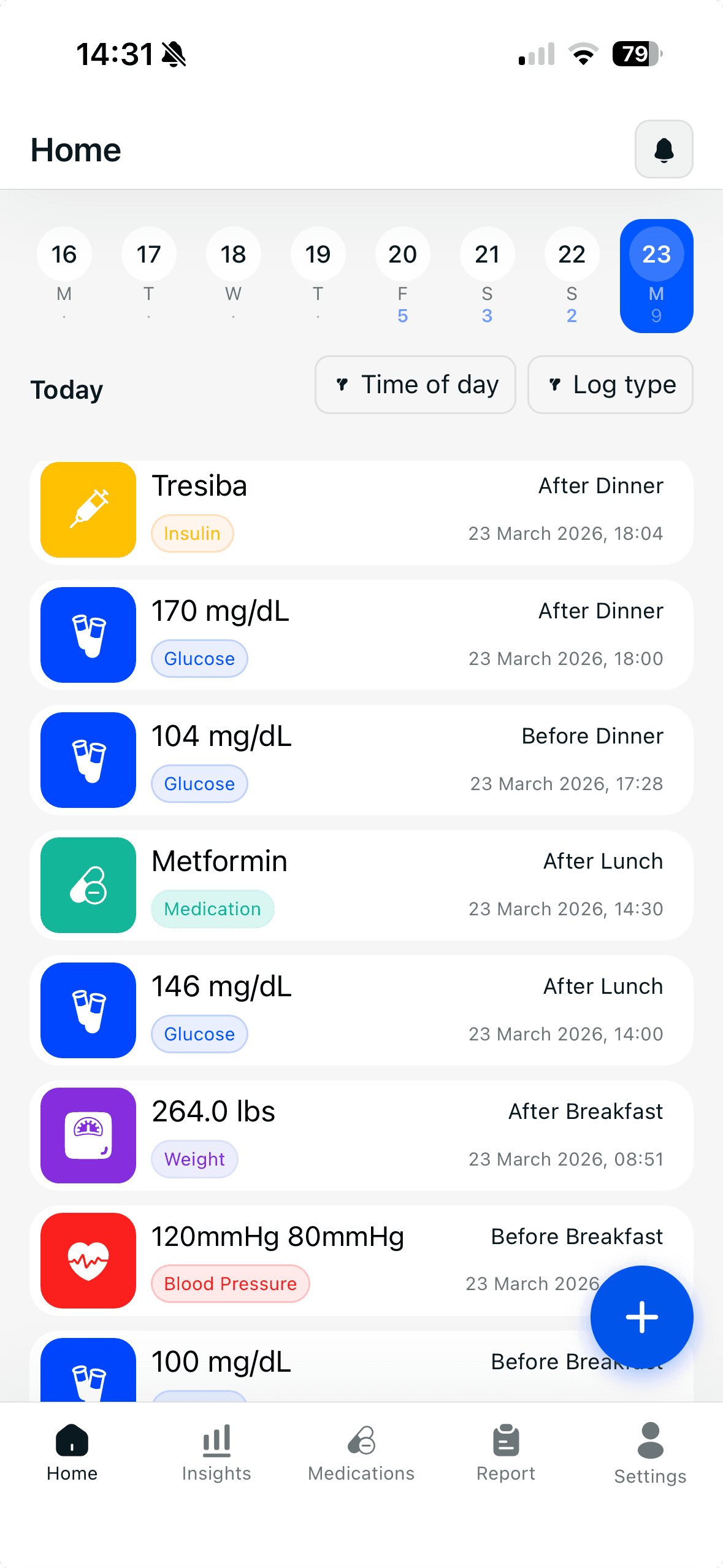
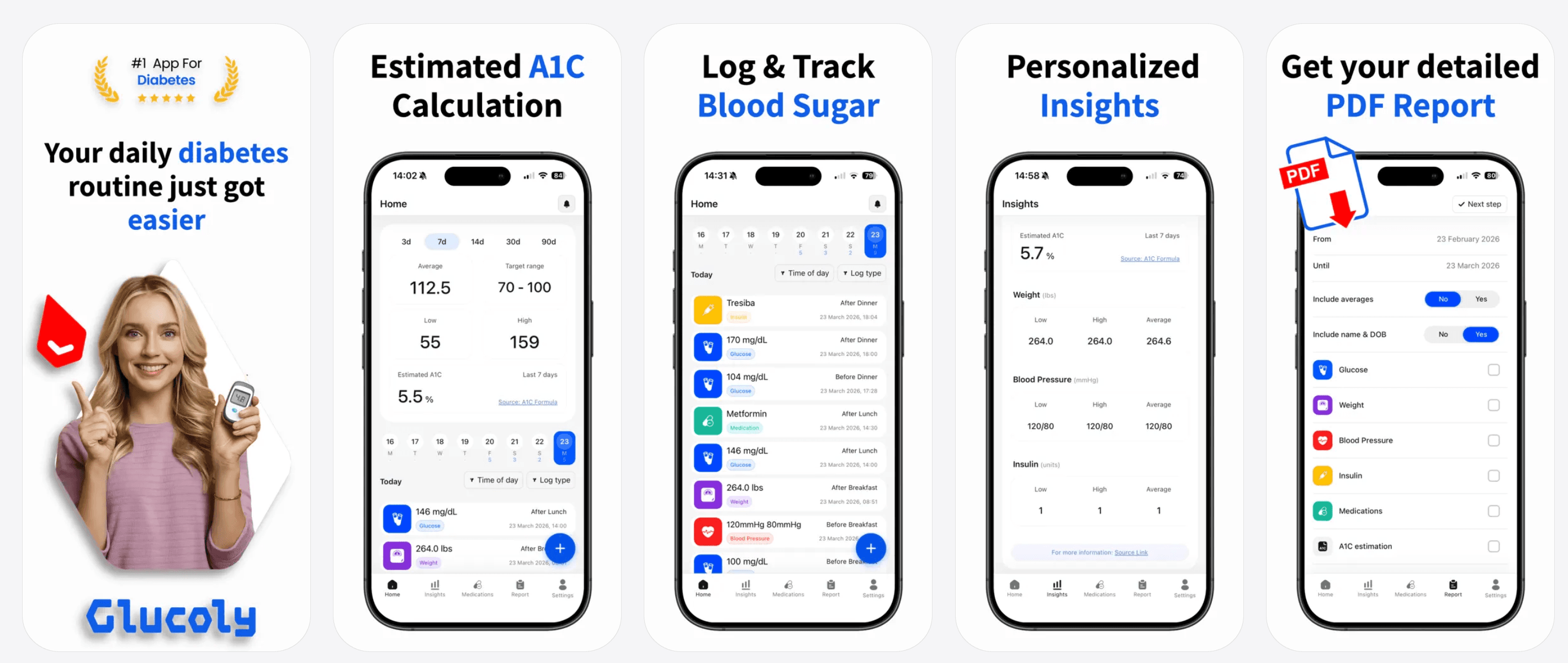
The dawn phenomenon is a pattern, not a one-off event - and patterns only become visible with consistent logging over time. Glucoly's fasting glucose log and smart reminders make it easy to check and record your waking reading every morning without breaking stride.
Over 7–14 days, the trend windows in Glucoly show whether your morning readings are consistently higher than your bedtime readings, and by how much. If you use a Dexcom or Libre CGM, Apple Health sync brings in continuous overnight data automatically, giving you the full overnight curve rather than just two data points.
- Set a morning reminder in Glucoly to log your fasting glucose before eating - building the habit is the hardest part.
- Use the 14-day or 30-day trend view to compare fasting readings day over day and identify the consistent rise.
- Export a doctor-ready PDF report from Glucoly to bring your overnight and fasting glucose data to your next appointment - your care team can see the pattern at a glance.
This article is for general education and is not medical advice. Consult your healthcare provider before making changes to your treatment plan.
Frequently Asked Questions
Is the dawn phenomenon the same as the Somogyi effect?
- No - they produce similar symptoms (high morning blood sugar) but have opposite causes.
- The dawn phenomenon is driven by a natural hormonal surge that raises glucose from a normal overnight baseline.
- The Somogyi effect starts with an overnight low (below 70 mg/dL / 3.9 mmol/L), usually from too much insulin, followed by a rebound rise.
- Checking glucose at 3 a.m. - or reviewing your CGM's overnight trace - is the reliable way to distinguish them.
Can you prevent the dawn phenomenon?
- You cannot stop the hormonal surge that causes it - it is a normal part of your circadian biology.
- You can reduce its effect on your fasting blood sugar through medication adjustments (basal insulin timing for T1D, medication timing for T2D), evening lifestyle habits, and in some cases dietary tweaks.
- The most effective interventions are prescribed and monitored by your care team, who will base recommendations on your overnight glucose data.
- Consistent logging in Glucoly gives your care team the data they need to make targeted, evidence-based adjustments.
What blood sugar level is normal in the morning?
- For people without diabetes: a normal fasting blood sugar is below 100 mg/dL (5.6 mmol/L).
- For adults with diabetes: the American Diabetes Association's general target for fasting / pre-meal glucose is 80–130 mg/dL (4.4–7.2 mmol/L) - but your personal target may differ.
- A reading above 130 mg/dL (7.2 mmol/L) every morning is worth discussing with your healthcare provider.
- Context matters: one high morning reading is not a crisis; a consistent pattern above your target is worth addressing.
Sources
- American Diabetes Association. Standards of Medical Care in Diabetes 2024. diabetes.org
- Centers for Disease Control and Prevention. Blood Sugar Management. cdc.gov/diabetes/managing
Log your fasting glucose every morning and watch the trend in Glucoly - free on the App Store and Google Play.
Download GlucolyShare this article
Related Posts
What Is LADA (Type 1.5 Diabetes)? Symptoms and How It Differs from Type 1 and Type 2
LADA (type 1.5 diabetes) is autoimmune diabetes that develops slowly in adults, often misdiagnosed as type 2.…
Read more →EducationDiabetic Retinopathy: How Diabetes Affects Your Eyes (and How to Protect Them)
Diabetic retinopathy is the leading cause of blindness in adults — largely preventable. Learn the stages, symp…
Read more →EducationWhat Is Diabetic Ketoacidosis (DKA)? Warning Signs You Must Know
DKA is a life-threatening diabetes emergency. Know the warning signs — fruity breath, vomiting, confusion — an…
Read more →