Accurate data makes your diabetes appointments count. Here's exactly what to track - blood sugar, weight, medications, activity - and bring to your doctor.
The Importance of Accurate Data in Diabetes Management
Accurate data is the foundation of effective diabetes management. When preparing for a doctor's appointment, the quality of the information you provide can significantly impact the advice and treatment plan you receive. Your healthcare provider relies on accurate and detailed data to understand how well your current management strategies are working and to identify any necessary adjustments.
In this article
- The Importance of Accurate Data in Diabetes Management
- Tracking Blood Sugar Levels: What Your Doctor Needs to Know
- The Role of Weight and BMI Data in Your Doctor's Assessment
- Why You Should Keep a Detailed Medication Log
- How Monitoring Physical Activity Can Improve Your Doctor's Advice
- Leveraging Glucoly for Holistic Diabetes Management
- Final Checklist: Key Metrics to Bring to Your Appointment
Blood sugar levels, medication adherence, dietary habits, physical activity, and even stress levels all contribute to your overall health picture. If this data is not recorded accurately or consistently, it may lead to misinterpretations that could affect your treatment outcomes. Precise data also helps your doctor detect potential issues early, before they become severe complications.
Tracking Blood Sugar Levels: What Your Doctor Needs to Know
Blood sugar tracking is one of the most crucial aspects of diabetes management. When preparing for your appointment, bring a comprehensive log of your blood sugar readings, ideally spanning at least two weeks. Include details such as the time of day, relation to meals, and any other relevant circumstances. This data allows your doctor to identify patterns, such as frequent spikes or drops, and make adjustments to your insulin regimen, dietary recommendations, or other aspects of your care.
The Role of Weight and BMI Data in Your Doctor's Assessment
Weight and BMI (Body Mass Index) are critical health metrics that play a significant role in diabetes management. Weight fluctuations can indicate how well your diet and exercise plans are working. By providing your doctor with up-to-date weight and BMI data, you enable them to assess whether your current treatment plan is effective or if modifications are needed, and to set realistic health goals.
Why You Should Keep a Detailed Medication Log
A detailed medication log helps you and your doctor keep track of all medications, including insulin, oral diabetes drugs, and any other prescriptions. It should include the name of the medication, dosage, frequency, and the time of day it's taken. By reviewing your medication log, your doctor can assess how well your current regimen is working and make necessary adjustments, especially important if you're experiencing side effects or inconsistent blood sugar levels.
How Monitoring Physical Activity Can Improve Your Doctor's Advice
Physical activity plays a vital role in managing diabetes, and tracking your exercise routines can significantly enhance the guidance you receive. By logging details such as the type, duration, and intensity of your workouts, you provide your doctor with valuable information that can be used to tailor your treatment plan and identify the best times for exercise relative to meals and medication.
Leveraging Glucoly for Holistic Diabetes Management
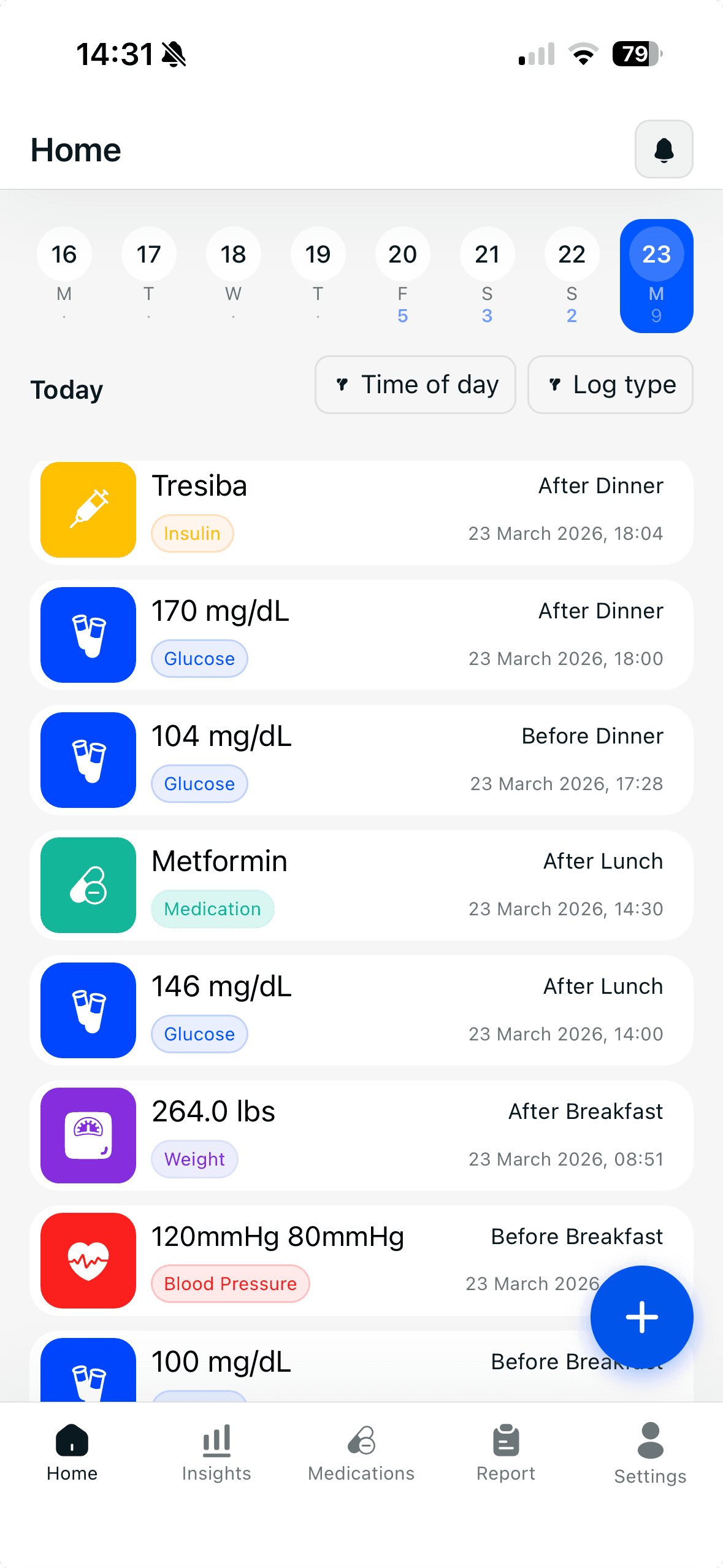
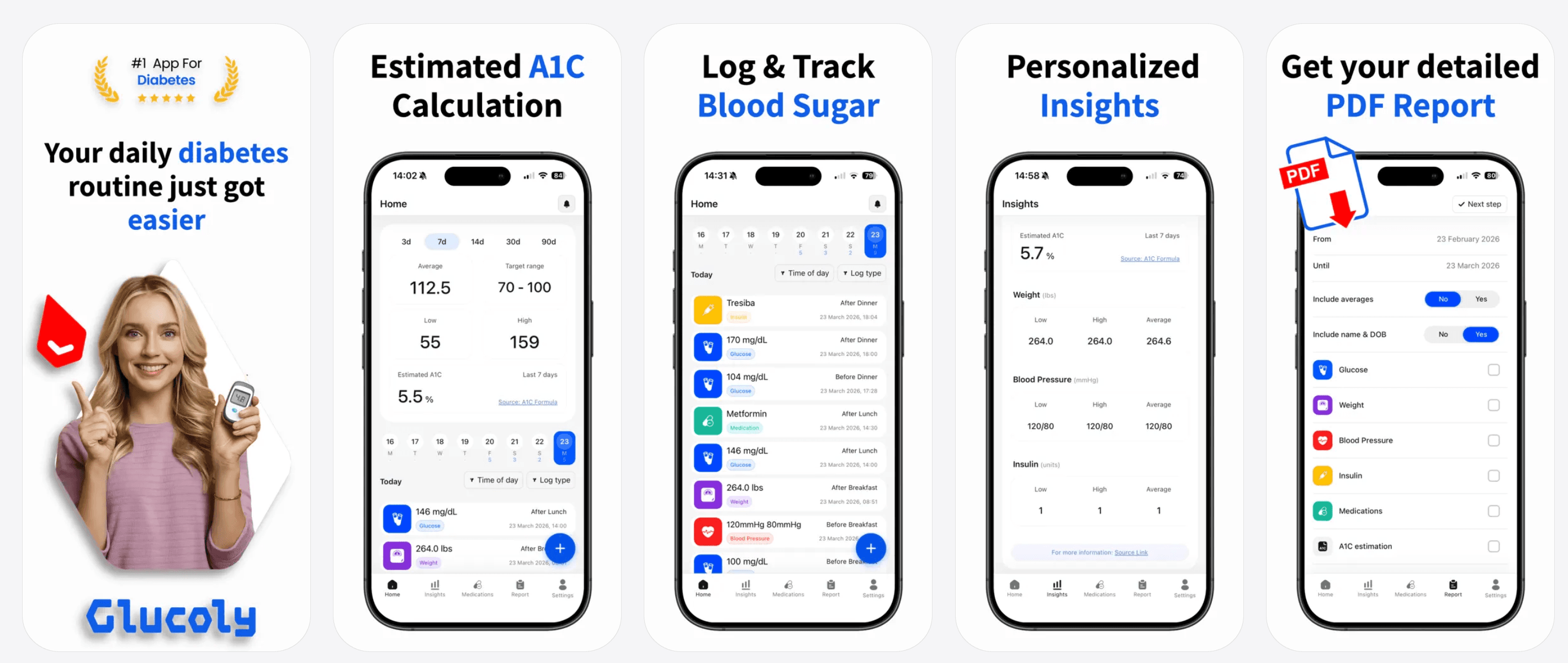
Glucoly integrates multiple health metrics into one easy-to-use platform: blood sugar, weight, physical activity, and medications, all in one place. Customizable reminders ensure you never miss a reading or a dose, and data analysis tools provide insights into trends and patterns. Glucoly also lets you share your data with your healthcare provider, making your visits more productive and your treatment more personalized.
Final Checklist: Key Metrics to Bring to Your Appointment
- Blood sugar log: a detailed record noting times, relation to meals, and any significant activities.
- Medication log: information on all medications, including doses and timings.
- Weight and BMI data: regular updates showing trends over time.
- Physical activity log: details of your exercise routines, including type, duration, and intensity.
Sources
- American Diabetes Association. Standards of Medical Care in Diabetes 2024. diabetes.org
Download Glucoly today on the App Store and Google Play for a smarter, more integrated approach to managing your diabetes.
Download GlucolyShare this article
Related Posts
4 Free Diabetes Calculators to Bookmark in 2026
Blood sugar converter, A1C calculator, insulin correction factor, and carb counter — free online tools for dia…
Read more →DiabetesBest Diabetes Tracking Apps of 2026 (Reviewed & Ranked)
The top diabetes tracking apps of 2026 compared — Glucoly, mySugr, Dario, Glucose Buddy, and One Drop ranked b…
Read more →DiabetesGlucoly vs Dario: Diabetes App Comparison 2026
Glucoly vs Dario: compare a free multi-metric diabetes app to a connected glucometer platform. Find out which…
Read more →